- posted: Jan. 08, 2026
If you or a loved one has been diagnosed with an Inflammatory Bowel Disease (IBD), you are familiar with the challenging symptoms, chronic abdominal pain, persistent diarrhea, and fatigue. IBD is not the same as Irritable Bowel Syndrome (IBS); it is a chronic, autoimmune condition that causes inflammation and damage to the lining of the gastrointestinal (GI) tract. The two primary types of IBD are Crohn’s Disease and Ulcerative Colitis (UC). While they share many symptoms, they are different in their location, pattern, and depth of inflammation. Understanding these distinctions is important because it dictates the treatment plan. The gastroenterology experts at North Jersey Gastroenterology in Wayne, NJ, specialize in the precise diagnosis and comprehensive management of both conditions.
The Key Difference: Location of Inflammation
The most significant factor separating Crohn’s Disease from Ulcerative Colitis is where the inflammation occurs in the GI tract:
Ulcerative Colitis (UC)
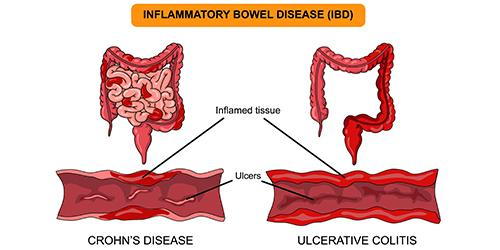
- Location: UC affects only the large intestine (colon) and the rectum.
- Pattern: Inflammation is continuous. It always begins in the rectum and spreads upward through the colon in an unbroken pattern. It does not skip areas.
- Depth: Inflammation is superficial, affecting only the innermost lining (mucosa) of the colon wall.
- Key Symptoms: Frequent, bloody diarrhea, urgency, and tenesmus (feeling the need to pass stool even when the bowels are empty).
Crohn’s Disease
- Location: Crohn’s can affect any part of the GI tract, from the mouth to the anus, though it most commonly affects the end of the small intestine (ileum) and the beginning of the large intestine.
- Pattern: Inflammation is patchy or “skip lesions.” Areas of healthy tissue often appear between sections of diseased tissue.
- Depth: Inflammation is transmural, meaning it can extend through all layers of the bowel wall. This deeper inflammation is what can lead to complications like strictures (narrowing of the bowel), fistulas (abnormal connections between organs), and abscesses.
- Key Symptoms: Abdominal pain, cramping, weight loss, malnutrition, and diarrhea (which may not always be bloody).
Diagnosis and Treatment Implications
Because of these fundamental differences in location and depth, the diagnostic and treatment paths at our Wayne, NJ, practice vary:
- Diagnosis: Both conditions rely on endoscopy (colonoscopy or sigmoidoscopy), with tissue samples (biopsies) taken for microscopic analysis. For Crohn’s, additional imaging (like CT or MRI enterography) may be needed to view the full extent of the small intestine, which cannot be reached by a standard colonoscope.
- Treatment Zones: Medications for UC are often focused on the colon, while Crohn’s treatment must address disease activity wherever it is present, sometimes requiring both oral and injectable therapies to manage inflammation in both the small and large intestines. For severe Crohn’s, surgical removal of a diseased section of the small intestine may be required, a less common necessity for UC.
Your Partner in IBD Management
Managing IBD requires personalized, ongoing care from a specialized gastroenterologist. At North Jersey Gastroenterology, we use advanced diagnostic tools to determine the exact nature and extent of your inflammation. We then develop a customized treatment plan, often involving immunomodulators or biologics, to achieve remission, reduce symptoms, and prevent long-term complications.
To discuss a management plan for your IBD, schedule an appointment at our Wayne, NJ, gastroenterology practice by calling 973-633-1484.
- posted: Jan. 08, 2026
If you or a loved one has been diagnosed with an Inflammatory Bowel Disease (IBD), you are familiar with the challenging symptoms, chronic abdominal pain, persistent diarrhea, and fatigue. IBD is not the same as Irritable Bowel Syndrome (IBS); it is a chronic, autoimmune condition that causes inflammation and damage to the lining of the gastrointestinal (GI) tract. The two primary types of IBD are Crohn’s Disease and Ulcerative Colitis (UC). While they share many symptoms, they are different in their location, pattern, and depth of inflammation. Understanding these distinctions is important because it dictates the treatment plan. The gastroenterology experts at North Jersey Gastroenterology in Wayne, NJ, specialize in the precise diagnosis and comprehensive management of both conditions.
The Key Difference: Location of Inflammation
The most significant factor separating Crohn’s Disease from Ulcerative Colitis is where the inflammation occurs in the GI tract:
Ulcerative Colitis (UC)
- Location: UC affects only the large intestine (colon) and the rectum.
- Pattern: Inflammation is continuous. It always begins in the rectum and spreads upward through the colon in an unbroken pattern. It does not skip areas.
- Depth: Inflammation is superficial, affecting only the innermost lining (mucosa) of the colon wall.
- Key Symptoms: Frequent, bloody diarrhea, urgency, and tenesmus (feeling the need to pass stool even when the bowels are empty).
Crohn’s Disease
- Location: Crohn’s can affect any part of the GI tract, from the mouth to the anus, though it most commonly affects the end of the small intestine (ileum) and the beginning of the large intestine.
- Pattern: Inflammation is patchy or “skip lesions.” Areas of healthy tissue often appear between sections of diseased tissue.
- Depth: Inflammation is transmural, meaning it can extend through all layers of the bowel wall. This deeper inflammation is what can lead to complications like strictures (narrowing of the bowel), fistulas (abnormal connections between organs), and abscesses.
- Key Symptoms: Abdominal pain, cramping, weight loss, malnutrition, and diarrhea (which may not always be bloody).
Diagnosis and Treatment Implications
Because of these fundamental differences in location and depth, the diagnostic and treatment paths at our Wayne, NJ, practice vary:
- Diagnosis: Both conditions rely on endoscopy (colonoscopy or sigmoidoscopy), with tissue samples (biopsies) taken for microscopic analysis. For Crohn’s, additional imaging (like CT or MRI enterography) may be needed to view the full extent of the small intestine, which cannot be reached by a standard colonoscope.
- Treatment Zones: Medications for UC are often focused on the colon, while Crohn’s treatment must address disease activity wherever it is present, sometimes requiring both oral and injectable therapies to manage inflammation in both the small and large intestines. For severe Crohn’s, surgical removal of a diseased section of the small intestine may be required, a less common necessity for UC.
Your Partner in IBD Management
Managing IBD requires personalized, ongoing care from a specialized gastroenterologist. At North Jersey Gastroenterology, we use advanced diagnostic tools to determine the exact nature and extent of your inflammation. We then develop a customized treatment plan, often involving immunomodulators or biologics, to achieve remission, reduce symptoms, and prevent long-term complications.
To discuss a management plan for your IBD, schedule an appointment at our Wayne, NJ, gastroenterology practice by calling 973-633-1484.