Upper Endoscopy in Wayne, Pompton Lakes & Kinnelon, NJ
At North Jersey Gastroenterology in Wayne, NJ, upper endoscopy is used to evaluate symptoms affecting the esophagus, stomach, and upper small intestine. This procedure allows a gastroenterologist to view the digestive tract directly, identify potential causes of discomfort, and guide treatment plans based on accurate findings. Patients receive careful preparation, precise evaluation, and personalized care throughout the process.
What Is an Upper Endoscopy?
An upper endoscopy is performed to visually examine the upper portion of the digestive tract, including the esophagus, stomach, and duodenum. The procedure helps identify inflammation, ulcers, bleeding, infection, or abnormal growths in these areas. Unlike imaging studies, an upper endoscopy allows the physician to directly observe tissue in real time and obtain biopsies when necessary to confirm a diagnosis.
When Is an Upper Endoscopy Recommended?
Providers may recommend an upper endoscopy when symptoms suggest a condition affecting the upper digestive tract. Common indications include persistent heartburn, unexplained abdominal pain, difficulty swallowing, chronic nausea, or evidence of gastrointestinal bleeding. It may also be used to monitor known conditions such as esophageal disorders, stomach ulcers, or celiac disease. Early evaluation through endoscopy helps determine whether treatment is needed and which approach will be most effective.
How the Procedure Works
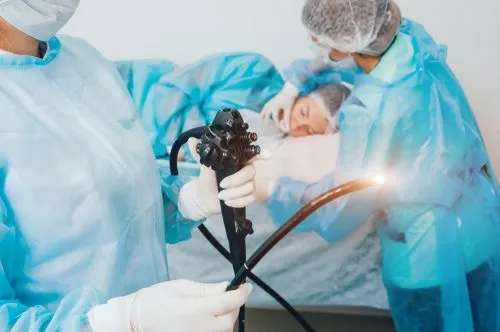
Before the procedure, patients receive instructions regarding fasting and medication management. Sedation is typically used to ensure comfort. During the endoscopy, the gastroenterologist advances a thin, flexible scope through the mouth and into the upper digestive tract. A small camera at the tip of the scope transmits images to a monitor, enabling careful inspection of the tissue. If any abnormal areas are seen, small tissue samples may be collected for laboratory analysis.
Recovery and Results
After the procedure, patients spend a short period in recovery while the sedation wears off. Most individuals can return home the same day with instructions for rest and hydration. Mild throat irritation may occur briefly. Once biopsy results are available, the provider reviews the findings and explains the next steps in care. Treatment options depend on the underlying condition and may include medication, nutritional guidance, or follow-up testing.
Expert Evaluation and Care
Upper endoscopy provides valuable insight into conditions affecting the upper digestive tract and supports accurate diagnosis. At North Jersey Gastroenterology in Wayne, NJ, patients receive experienced care from a team dedicated to improving digestive health through thoughtful evaluation and individualized treatment. To schedule an appointment, call 973-633-1484.
This information was developed by the Publications Committee of the American Society for Gastrointestinal Endoscopy (ASGE). For more information about ASGE, visit www.asge.org.
This information is intended only to provide general guidance. It does not provide definitive medical advice. You must consult your doctor about your specific condition.

Download this article in PDF format. Don't have Adobe Reader? Download it here

During upper endoscopy, your doctor examines the lining of the upper part of your gastrointestinal tract, which includes the esophagus, stomach, and duodenum (the first portion of the small intestine).
What is upper endoscopy?
Upper endoscopy allows your doctor to examine the lining of the upper part of your gastrointestinal tract, which includes the esophagus, stomach, and duodenum (the first portion of the small intestine). Your doctor will use a thin, flexible tube called an endoscope, which contains a lens and light source, and view the images on a video monitor.
Why is upper endoscopy done?
Upper endoscopy helps your doctor evaluate symptoms such as upper abdominal pain, nausea, vomiting, or difficulty swallowing. It's the best test for finding the cause of bleeding from the upper gastrointestinal tract. It is also more accurate than X-ray films for detecting inflammation, ulcers, and tumors of the esophagus, stomach, and duodenum. Your doctor might use an upper endoscopy to obtain a biopsy (small tissue samples). A biopsy helps your doctor distinguish between benign (non-cancerous) and malignant (cancerous) tissues. Remember, biopsies are taken for many reasons, and your doctor may take a biopsy even if they do not suspect cancer. For example, your doctor might use a biopsy to test for Helicobacter pylori, the bacterium that causes ulcers. Your doctor may also use an upper endoscopy to perform a cytology test, in which a small brush is introduced to collect cells for analysis. Upper endoscopy is also used to treat conditions of the upper gastrointestinal tract. Your doctor can pass instruments through the endoscope to directly treat many abnormalities, causing you little to no discomfort. For example, your doctor might stretch (dilate) a narrowed area, remove polyps (which are usually benign growths), or treat bleeding.

Upper endoscopy enables the doctor to view the lining of the upper gastrointestinal tract, including the esophagus, shown here in two views.
What preparations are required?
An empty stomach allows for the best and safest examination, so you should have nothing to eat or drink, including water, for approximately six hours before the examination. Your doctor will tell you when you should start fasting, as the timing
can vary. Inform your doctor in advance about any medications you are taking; you may need to adjust your usual dose for the examination. Please disclose any allergies to medications, as well as any medical conditions, such as heart or lung disease.
Can I take my current medications?
Most medications can be continued as usual; however, some may interfere with the preparation or examination. Inform your doctor about all medications you're taking, particularly aspirin products, antiplatelet agents, arthritis medications, anticoagulants (blood thinners such as warfarin or heparin), clopidogrel, insulin, or iron supplements. Also, be sure to mention any allergies you have to medications.
What happens during upper endoscopy?
Your doctor may start by spraying your throat with a local anesthetic or administering a sedative to help you relax. You'll then lie on your side, and your doctor will pass the endoscope through your mouth and into the esophagus, stomach, and duodenum. The endoscope doesn't interfere with your breathing. Most patients consider the test only slightly uncomfortable, and many patients fall asleep during the procedure.

An endoscope is a medical device used by expert physicians to examine the inside of the digestive tract.
What happens after upper endoscopy?
You will be monitored until most of the effects of the medication have worn off. Your throat might be a little sore, and you might feel bloated because of the air introduced into your stomach during the test. You will be able to eat after you leave unless your doctor instructs you otherwise. Your physician will explain the results of the examination to you, although you'll probably have to wait for the results of any biopsies performed.
If you have been given sedatives during the procedure, someone must drive you home and stay with you. Even if you feel alert after the procedure, your judgment and reflexes could be impaired for the rest of the day.
What are the possible complications of upper endoscopy?
Although complications can occur, they are rare when the test is performed by doctors who are specially trained and experienced in this procedure. Bleeding can occur at a biopsy site or where a polyp was removed, but it's usually minimal and rarely requires follow-up. Perforation (a hole or tear in the gastrointestinal tract lining) may require surgery, but this is a very uncommon complication. Some patients might react to the sedatives or complications from heart or lung disease. Although complications after upper endoscopy are infrequent, it's essential to recognize the early signs of possible complications. Contact your doctor immediately if you develop a fever after the test or if you experience trouble swallowing, increased throat, chest, or abdominal pain, or bleeding, including black stools. Please note that bleeding may occur several days after the procedure.
If you have any concerns about a potential complication, it is best to contact your doctor immediately.
Download this article in PDF format. Don't have Adobe Reader? Download it here
Important Reminder: This information is intended only to provide general guidance. It does not provide definitive medical advice. You must consult your doctor about your specific condition.

Since its founding in 1941, the American Society for Gastrointestinal Endoscopy (ASGE) has been dedicated to advancing patient care and digestive health by promoting excellence in gastrointestinal endoscopy. ASGE, with over 11,000 members worldwide, promotes the highest standards for endoscopic training and practice, fosters endoscopic research, and is the premier resource for endoscopic education.
This patient education brochure was developed by the Publications Committee of the American Society for Gastrointestinal Endoscopy. This information is the opinion of and provided by the American Society for Gastrointestinal Endoscopy.
American Society for Gastrointestinal Endoscopy www.asge.org and www.screen4coloncancer.org
Copyright©2010. American Society for Gastrointestinal Endoscopy. All rights reserved. This information may not be reproduced without express written permission from ASGE. For permission requests, please contact the ASGE Communications Department at 630-673-0600.